Arduino Forgot to Save Get Code From Last Upload
As an electronics engineer getting back to my roots with Arduino, I found it could be a trivial confusing getting started uploading code (or sketches) to an Arduino. Installing drivers, IDEs, and everything else involved wasn't a straightforward task. Then I put this guide together based on my experience uploading lawmaking to a new Arduino on a new reckoner.
This guide is a pace-by-step (with pictures) on how to upload and run lawmaking on an Arduino using a Windows x machine. The Arduino I've used is the UNO WiFi Rev two, though the steps (and problems I solved) should be similar for almost Arduino models. See common problems at the bottom of this guide if yous're having any problems following the steps. I've likewise tended to use sketch and code interchangeably in this guide, a symptom of beingness an electronics and software engineer by training.
Stride 1: Connect Arduino using a USB Cable
Typically a USB Blazon-B cable is used to connect to an Arduino – it has the USB 2.0 Type-B connector on ane end and the USB two.0 Type-A connector (for a computer on the other).
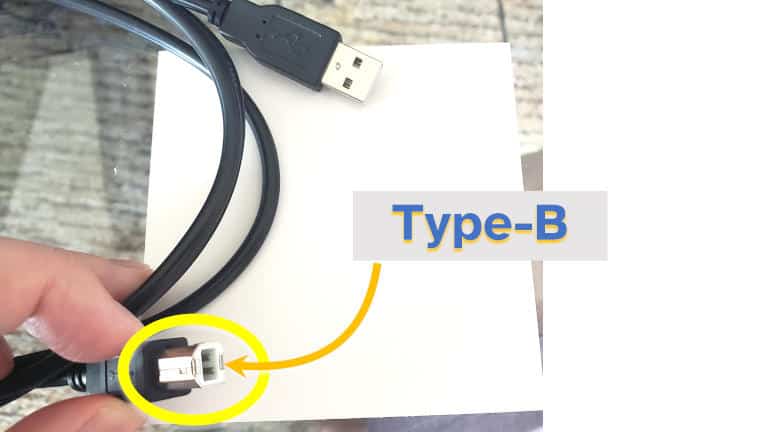
At the shop, I asked for a "USB printer cablevision" as this is too the sort of cable that is used to connect a figurer to a printer. It cost me a few dollars. Whatsoever standard length seems to be OK, though I imagine it must be shorter than 5 metres (16 feet); I concluded up buying a 1m cablevision.
It didn't matter which USB socket I used on my computer, they all seemed to work fine when communicating with the Arduino, even the USB Type-C hub that I use with my laptop allowed me to plan the Arduino.
A split power cablevision is not required; the USB connection to the computer will power the board.
Need more help with which USB cable to use, or which wires and cables an Arduino requires? I wrote a whole guide on USB cables and wires useful for Arduino, cheque information technology out here: chipwired.com/arduino-cables-and-wires
Footstep 2: Open the Arduino IDE
The IDE (Integrated Evolution Surroundings) is used to write code, compile programs, and upload them to the Arduino for it to execute.
The IDE can be downloaded from Arduino's website here. I used the portable ane, so all I had to do was extract information technology to a folder and run the executable. If installing information technology, follow the steps in the installation wizard to get started – I believe the installation magician has the advantage of taking care of installing the drivers for yous. Information technology's the IDE that lets y'all write lawmaking into sketches, compile those sketches into instructions for the processor, and upload those instructions to the Arduino.
If using the portable IDE, you might need to install drivers (this is what I had to do, see "Bug I encountered" below). The easiest way I institute to install drivers was to run the executable in the drivers folder where I extracted the executable to.
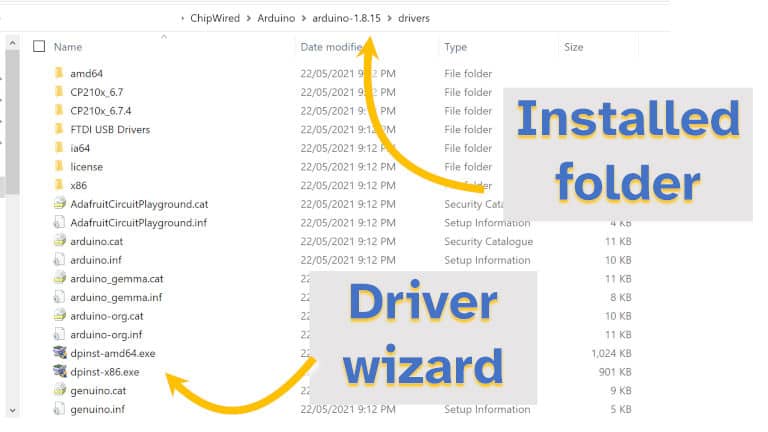
At beginning my board wasn't listed, I had to click some text in the lesser left of the IDE to update it so that my lath was shown. I was having a problem with uploading sketches until I clicked this update. Doing this update ran through the driver install wizard too (installing an additional driver), but I imagine it's a skillful idea to run through the wizard separately anyway (as I did above).
Footstep 3: Select the Arduino Board and Port
Under the Tools menu at the meridian of the IDE, select your Board and your Port.
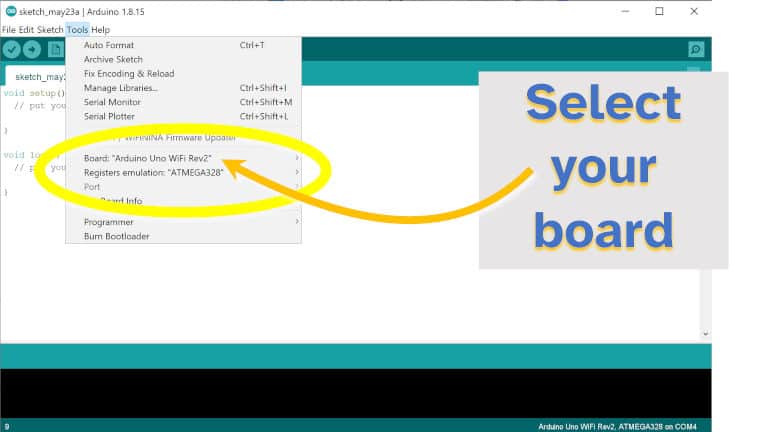
For Board, I constitute that mine didn't show upward at offset, and the IDE had selected a similar model. This caused me problems after, so make sure your board is selected. If your board isn't listed, check out the previous steps well-nigh installing drivers.
For Port, I found that the IDE automatically selected the right port as at that place was just one listed. Some of the enquiry I did said that if there was more ane port, try each of them that's not COM1 (evidently Windows never allocates this to an Arduino).
If Port is greyed out it ways that the IDE does not believe the Arduino is continued to the computer. Connect the Arduino and Port will get an option that tin be selected. If the Arduino is connected, information technology means the IDE cannot identify it, take a look at installing the drivers as per Pace ii.
Footstep 4: Ready a Sketch (or write some lawmaking)
Starting with an example is the easiest fashion I've plant of testing out a new Arduino and computer setup, or getting started on your ain project.
To employ an example sketch, click File then Examples then Nuts and I similar to beginning with the blink example. This will load a new sketch that contains code to glimmer the LED on your board. These examples are already configured for your lath and then information technology should blink the right LED without whatever need to modify the code.
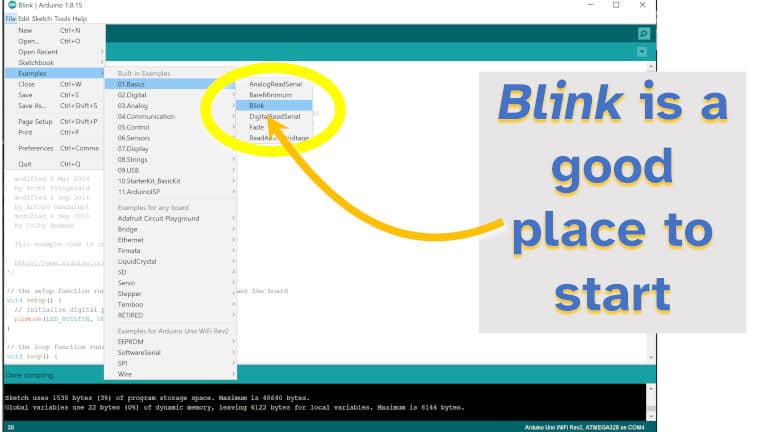
Fifty-fifty when starting my own project, I like to apply one of these examples as a starting bespeak. Information technology'due south code and a setup that you know works, which is a skilful place to get-go. I and so add to the code to accomplish any I'1000 trying to do.
Arduino lawmaking, independent in a sketch, is separated into two sections: A setup, that's run once when the board powers up (or programming has finished); and a loop that runs in a loop as long as there is power to the board. There are other ways that code can be executed (I'm thinking interrupts here), but that's another commodity's worth of detail.
Step five: Upload Sketch (look for the Tx and Rx LEDs flashing)
To get the code running on the Arduino, click Sketch then Upload. The upload step will too do the verify/compile step, so there's no need to click it separately for the purposes of this guide.
The RX and TX LEDs should flicker a little every bit the IDE sends the lawmaking to the lath.
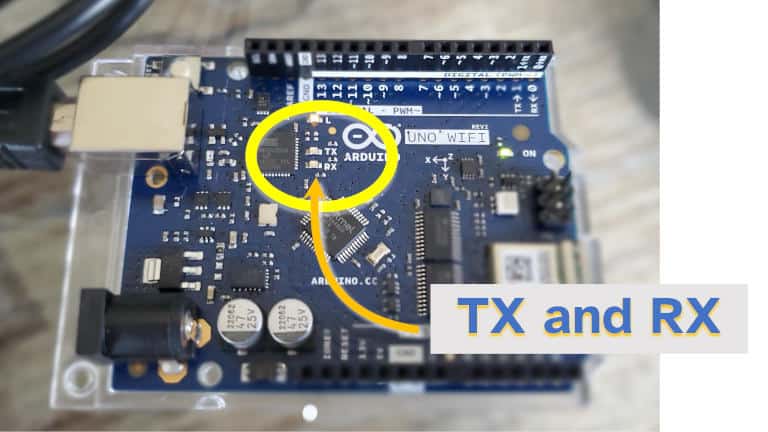
I plant that as soon as uploading the code was complete, the Arduino started to execute it. This took me a while to realise as the default sketch loaded on my Arduino (UNO WiFi Rev two) was the Blink 1 where the LED blinked every 2d. To examination this, I modified the lawmaking to wink unevenly (attempt changing the delay(20) numbers) then that it was obvious my code was running on the lath.
If your code is not running on the board, bank check out the section beneath where I go through some of the issues I encountered.
Finishing Up
After post-obit these steps, you lot should at present have:
- An Arduino connected to your computer
- An IDE that uploads code/sketches from your figurer to your Arduino
- An Arduino that executes the lawmaking that was uploaded to it

If you're Arduino is non running the uploaded code, there could be a few things that went wrong. I've included beneath how I solved some of the problems I faced when uploading my get-go sketch to an Arduino.
Common Bug when Uploading Arduino Code
If you need assistance with writing the lawmaking for a sketch, I wrote a whole guide on the nuts of an Arduino sketch and how to apply variables, equations, loops, functions, and more. Check information technology out here: chipwired.com/arduino-programming-language-guide
These are the problems I institute when I was trying to write my showtime programme to an Arduino:
My Board Wasn't Listed in the IDE
Under the Tools menu yous can see which board the IDE is intending to upload your programme to. When I opened the IDE for the first fourth dimension, information technology automatically selected a board that was like to mine simply non exactly the same. I encountered bug uploading the sketch to the lath considering I had the wrong 1 selected; my board wasn't even an option!
To prepare the problem where the target Arduino is non listed in the Tools menu:
- Install the latest drivers from Arduino, these tin can be found in the drivers folder where the arduino.exe file is stored
- Install whatsoever updates for the IDE, look in the bottom left-manus corner when the IDE is kickoff opened – it will alert you here if there are whatever necessary updates
Wrong COM Port or COM Port Greyed Out
Commonly this is due to the wrong drivers being installed for the lath y'all're using.
If you've installed all the drivers and your board is selected in the IDE (see in a higher place) simply the COM Port notwithstanding isn't right, I've heard that updating the drivers in the Windows Device Managing director is the way to fix this
Programmer is not responding
When I offset tried to upload a sketch to my Arduino an mistake popped upward proverb something like avrguy: programmer is not responding.
From my experience in microcontroller electronics (I'm relatively new to Arduino), the Arduino that runs your code tin can be a separate board to the device that records the program to the Arduino (the 'programmer'). On my first Arduino (an UNO WiFi Rev two), the developer and the microprocessor are part of the aforementioned board. Other Arduinos might accept different configurations – east.chiliad. having a separate programmer can relieve infinite every bit it doesn't ever demand to exist attached.
To set this problem:
- Ensure the right board is selected in the Tools carte of the IDE
- If there is an option to select the Programmer (in the Tools carte du jour), then make sure the right programmer is selected
- Ensure the right drivers for your Arduino (and programmer if separate) are installed on your figurer – see the steps above on how to exercise this
Afterwards many years away from electronics projects, Chris recently dived dorsum in by picking up an Arduino. This guide was written based on his first experiences setting up a calculator to program an Arduino.
Source: https://chipwired.com/uploading-code-arduino/
0 Response to "Arduino Forgot to Save Get Code From Last Upload"
Post a Comment